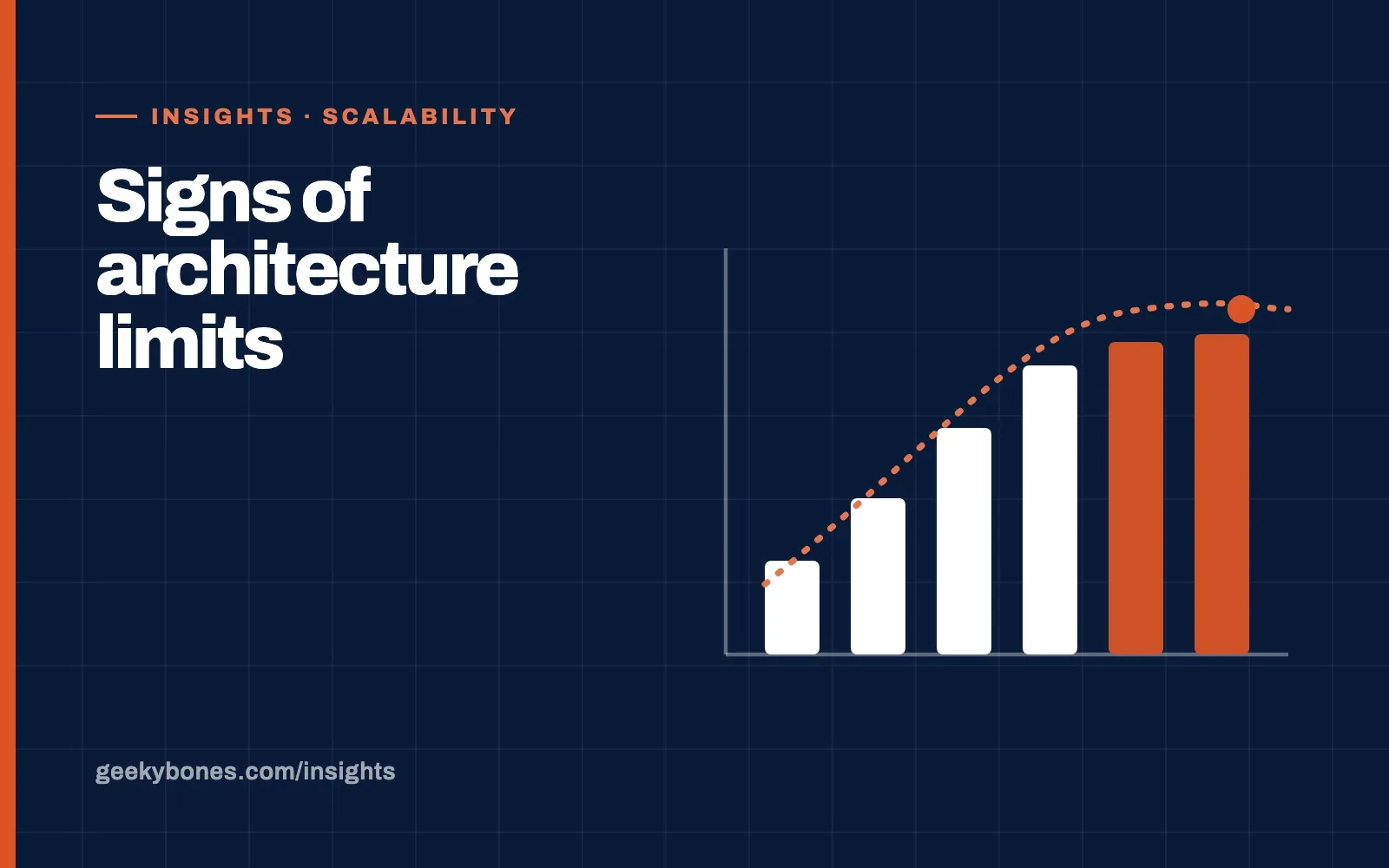
Architecture problems almost never show up as one big outage. They creep in. A page gets a bit slower. A release needs a hotfix. The team starts padding their estimates. None of it feels urgent on its own, but together it’s a sign that the system you launched with no longer fits the business you’ve become.
Catching this early is far cheaper than dealing with it in the middle of your busiest month. These are the signs we look for when a client says “things just feel slow lately”.
Pages get slower as data grows
If response times creep up month after month while traffic stays about the same, the problem is nearly always in the data layer. Missing indexes, queries that pull back far more than they need, or heavy reports running on the same database your customers use.
The good news is these are often quick wins. When we profile a slow app, a handful of queries is usually responsible for most of the load. Fixing five queries can feel like a new server.
Busy days cause trouble
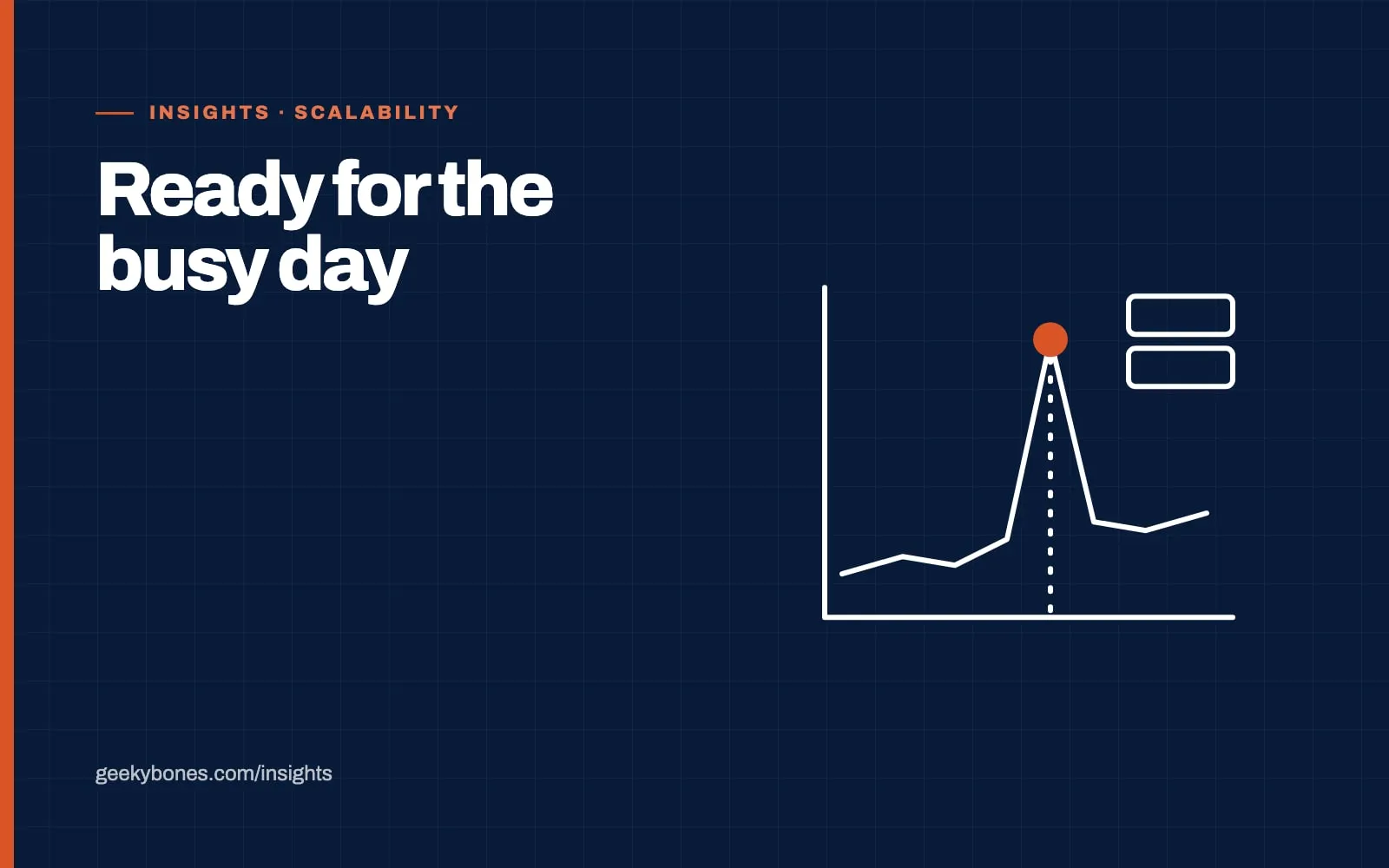
A system that’s fine on a quiet Tuesday but struggles during a sale, a campaign or the evening rush is showing you exactly where its limits are. Watch what happens under load. Database connections run out, background queues pile up, or one server does work that could easily be shared across several.
Small changes take weeks
When a “simple” feature gets a three-week estimate, or every release breaks something in an unrelated part of the app, the code has become tightly tangled. Pieces that should be independent depend on each other in ways nobody fully remembers.
Teams often call this a code quality issue. It’s really an architecture issue, and it slows the business down directly, because every idea now costs more to try.
Everything waits on one component
Lots of products have one part that everything else depends on. An order processing job, a partner integration, a service that generates PDFs. When it slows down, the whole product does.
Pulling that piece out so it can be queued, retried or scaled on its own tends to remove the most painful incidents in one go.
Hosting costs grow faster than users
If your cloud bill is growing faster than your user base, the system is probably doing work it doesn’t need to. Servers sized for a peak that happens twice a year, the same calculation repeated instead of cached, data stored and moved around for no reason. Cost problems and speed problems usually have the same causes, so fixing one tends to help the other.
What to do about it
Measure before you rewrite anything. Add monitoring for response times, errors and resource use, then profile the slowest and most frequent operations. That tells you where the real problems are, which is often not where the code looks oldest.
Then fix things in order of business impact. For most growing products we work on, a mix of query tuning, caching, moving heavy work into background jobs and isolating one or two critical parts gets you a long way. No big rebuild required.
Sometimes a part of the system really does need re-architecting. That’s fine. It should just be a targeted decision about a specific component, backed by numbers, and not a reaction to general frustration with the codebase.