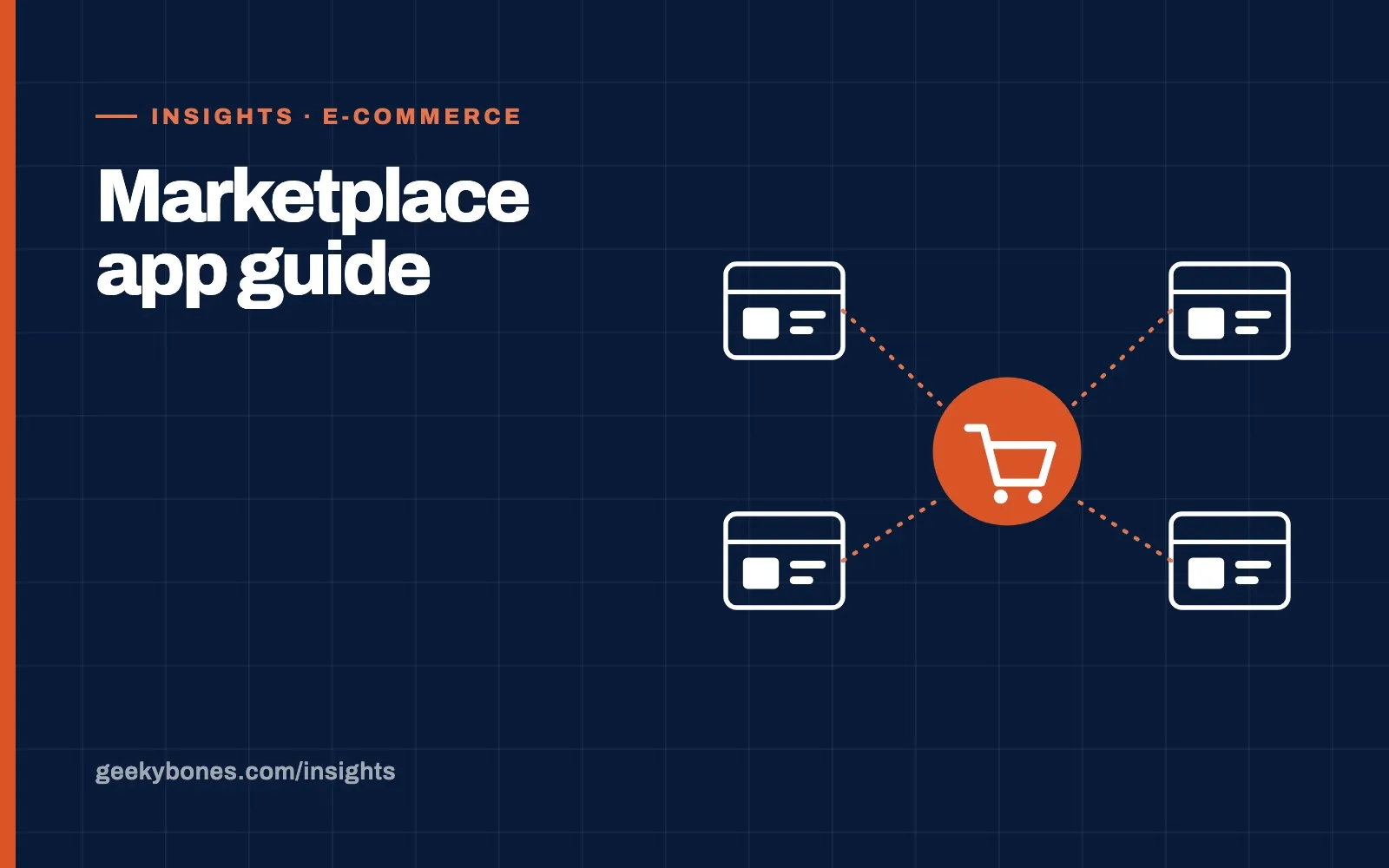
“We want to build something like Amazon” is one of the most common briefs we hear. From the outside a marketplace looks simple: products, a cart, a checkout. Underneath, it’s really three products that have to work together, plus a few hard problems that decide whether it can grow. Here’s what we tell founders before they spend anything.
Pick a niche and a reason to switch
Very few marketplaces win by being “Amazon, but smaller”. The ones that work pick a niche and give buyers a clear reason to come over: products they can’t find elsewhere, customisation, faster delivery, or better value for a particular audience.
Our own food marketplace, Swaaad, is built around home-cooked dishes you won’t find on the big delivery apps. Sports Gear Swag wins on fully custom team uniforms with no minimum order. Work out your version of that before anyone designs a screen.
It’s three products, not one
A marketplace serves three groups, and each one needs its own experience:
- Buyers browse, search, compare, check out and track orders
- Sellers sign up, manage listings and stock, handle orders and get paid
- Your team approves sellers, moderates content, sorts out disputes, sets commissions and watches the numbers
Most teams design the buyer side in loving detail and leave the seller and admin tools for the end. That’s backwards. If sellers can’t list products and manage orders easily, the catalogue never fills up, and an empty marketplace doesn’t grow.
What you actually need at launch
Keep version one focused. For most marketplaces that means:
- Easy sign-up for buyers and sellers, including social login
- Search with filters and decent suggestions
- Product pages with clear prices, photos and reviews
- A cart, a wishlist and a short, secure checkout
- Order updates by email and push notification
- A seller dashboard for listings, orders and earnings
- An admin panel to approve sellers and handle problems
Loyalty schemes, recommendations, live chat and fancy analytics can almost always wait until real usage shows you where they’d pay off.
The hard parts to budget for
These are the areas that take longer than people expect, and where you want experienced engineers:
- Payments and payouts. Taking a payment is easy. Splitting it between sellers, holding funds, handling refunds and paying out on time is not.
- Catalogue quality. Sellers upload messy data. Categories, validation and variants like size, colour and material need careful thought.
- Search. As the catalogue grows, search is the difference between a sale and someone leaving.
- Busy periods. Sales, campaigns and seasonal peaks expose slow queries and fragile checkouts very quickly.
- Trust. Verified sellers, honest reviews and clear refund rules turn a first order into a repeat customer.
When buyers design the product
Some marketplaces sell things the buyer designs: uniforms, signs, printed goods. In that case the product builder is the product. For Sports Gear Swag and Yard Sign Plus we built step-by-step builders with live previews, instant pricing and AI artwork, so people can design, price and order without waiting for a quote. If your products are configurable, plan the builder, the pricing rules and the proofing process early. They shape everything else.
Launch in stages
The path we’d suggest for most teams:
- Validate. An MVP with one buyer journey, a basic seller dashboard, and some manual work behind the scenes.
- Launch. Automated payouts, reviews, notifications, and the admin tools you now know you need.
- Scale. Performance work, recommendations, loyalty, and native apps if most of your buyers are on their phones.
What it costs depends mostly on scope: how many types of user, how complicated the payments are, how custom the products are, and which platforms you launch on. Going in stages keeps early spending low and lets real users tell you what to build next.