People often ask us “what app should we build?” It’s the wrong place to start. The best ideas we’ve worked on didn’t come from brainstorming apps. They came from a specific, annoying, expensive problem: customers waiting, staff wasting hours, or a service that’s hard to get hold of.
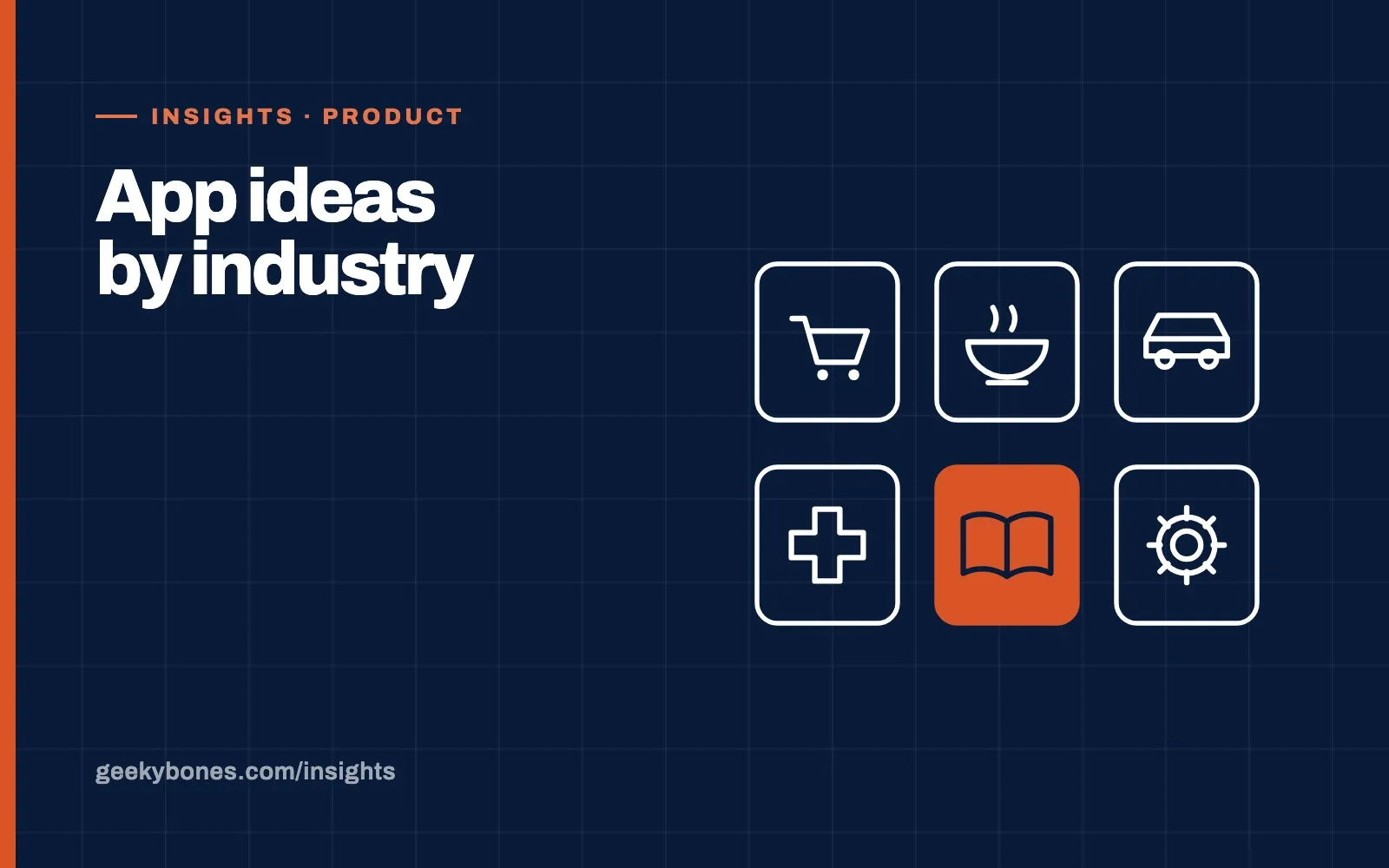
Here are the industries where we keep seeing custom apps pay off, with real examples from products we’ve built.
e-Commerce: let customers design it themselves
Another general online store is a hard sell. The interesting gap is products that are still awkward to buy online, especially anything custom. Buyers want to see what they’ll get and know the price straight away, without emailing back and forth for a quote.
That’s exactly what Sports Gear Swag and Yard Sign Plus do. Customers design team uniforms or signs in a guided builder, with a live preview and the price updating as they go.
Food: connect local cooks with local customers
Restaurant delivery is well covered. What isn’t: home cooks, small caterers, and regional food that only exists in a handful of local kitchens. A marketplace that makes those easy to find and order is offering something new.
Our own product, Swaaad, does this. Customers order from home kitchens, and the kitchens run their side from their own app and web portal.
Mobility: on-demand, with a twist
Ride-hailing is crowded, but there are still gaps: a professional driver for your own car, transport for a specific audience, or services booked by the hour rather than by the trip.
Troom is a good example. People book a driver who drives them in their own car, and it now handles more than 1,000 rides a month in Belgium.
Healthcare: cut the admin, not the care
The healthcare apps that work best save time on scheduling, referrals and communication, so clinical staff can spend it on patients. They also have to earn trust by being reliable and handling data carefully.
RxTro helps medical reps book, change and track appointments with GPs across Australia, instead of chasing clinics one phone call at a time.
Education: personal, without extra work
Learners do better with material pitched at their level, but teachers and parents don’t have time to make it by hand. AI finally makes this practical, as long as a person stays in control of what’s taught.
LingoTeach builds a full bilingual language lesson in about 90 seconds. Tandem turns a child’s ideas into an illustrated story the family reads together.
Operations: replace the spreadsheet
Some of the most valuable apps are never seen by customers. Bookings, field teams, stock, approvals, client portals. If part of your business runs on spreadsheets, email and phone calls, there’s very likely a focused app that would save hours every week.
How to test your own idea
Before you commit to a full build, ask yourself four things:
- Who has this problem, and how often? A daily headache beats an occasional annoyance.
- What do they do about it today? If the answer is “nothing”, demand may be weak. If it’s “a messy workaround”, that’s a good sign.
- Who pays, and why? Customers, businesses or advertisers, and what makes it worth their money.
- What’s the smallest version that proves it? One type of user, one journey, real people using it.
That smallest version is what our MVP in 3 weeks is for: a working product in front of real users, and real evidence for what to build next.