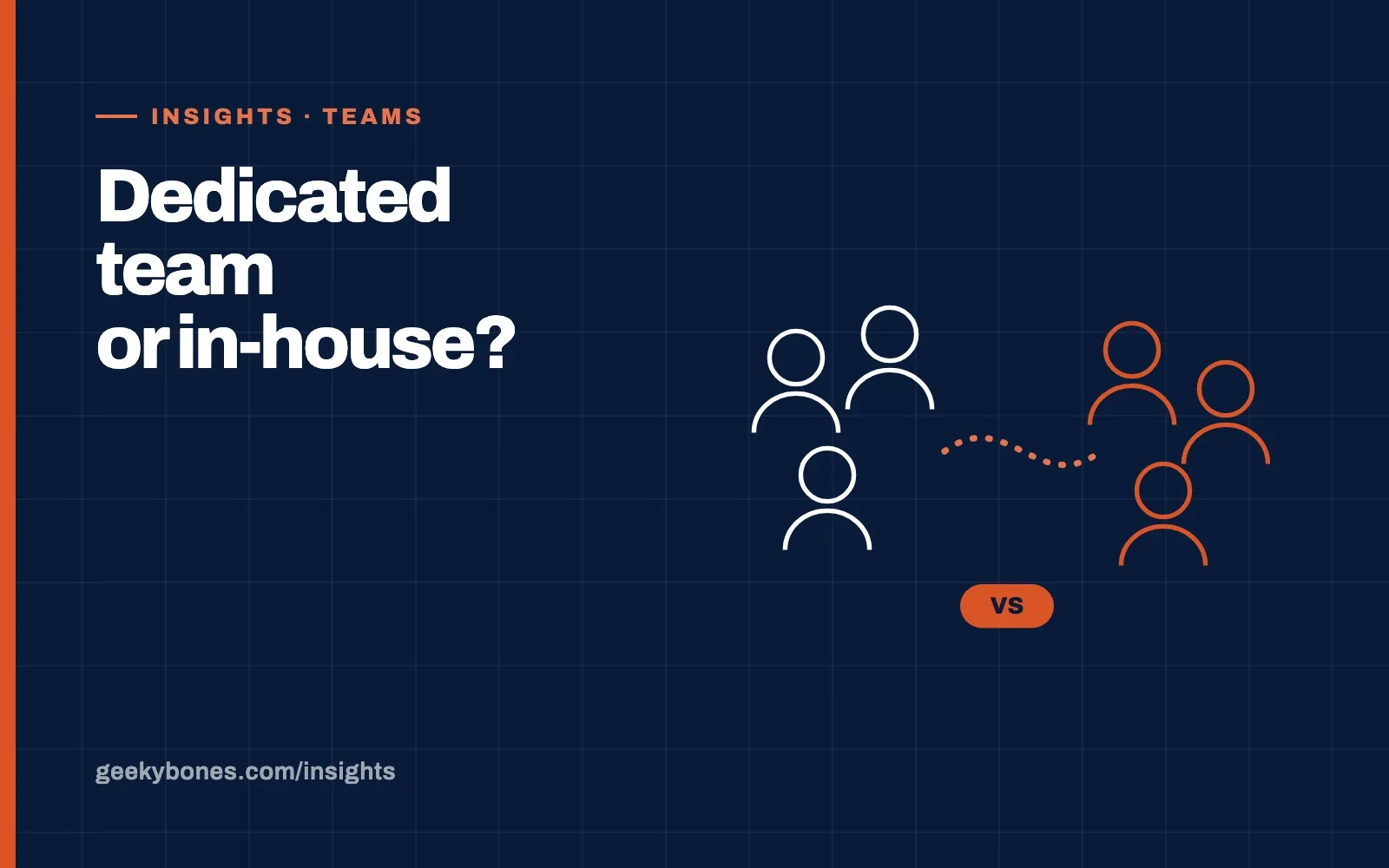
At some point most growing products need more engineers than they have. You can hire them yourself, or bring in a dedicated team from a partner who works inside your process. We obviously offer the second option, so take this with that in mind. But we’ll be honest: it isn’t always the right call. It depends on how fast you need to move, how sure you are about the workload, and which skills you’re missing.
Speed
Hiring good engineers is slow. You write the role, find candidates, run interviews, wait out notice periods, then onboard. For many companies it’s three to six months before a new hire is really productive.
A dedicated team can usually start within a couple of weeks, because the people already exist and already work together. If your roadmap has deadlines this quarter, that often settles the question by itself.
How sure you are about the work
In-house hires make the most sense for work you’re confident will carry on at a steady pace for years. A dedicated team fits better when the workload is growing, uncertain or lumpy. A big modernization project followed by a quieter maintenance phase is a classic example. You can scale the team up and down as priorities change, without hiring and letting people go.
The mix of skills
A small product often needs a spread of skills no single hire covers: frontend, backend, mobile, testing, DevOps, and now and then something specialist like AI or performance work. Hiring each role separately takes ages and costs a lot. A partner can give you that mix as one team and adjust it as the product changes.
Cost
Compare the full cost, not just a salary against a monthly rate. Hiring directly also means recruitment fees, benefits, equipment, management time, and the very real cost of a hire that doesn’t work out. A dedicated team’s rate usually covers most of that, plus someone to cover when a person is on holiday.
For long, stable workloads, in-house is often cheaper. For shorter or changing workloads, a dedicated team usually works out cheaper overall.
Keeping the knowledge
The biggest worry people have about external teams is losing knowledge when the engagement ends. It’s a fair worry, and it’s manageable if you plan for it:
- The team works in your repositories, tools and processes from day one
- Documentation and architecture decisions live where your own people can see them
- The same engineers stay on your product month after month
- Knowledge transfer is planned before any change, not rushed at the end
When it’s done well, a dedicated team feels like part of your engineering department, and the knowledge stays with the product rather than walking out the door.
What we usually recommend
Plenty of companies do both. They keep a small in-house core that owns product direction and architecture, and add a dedicated team for delivery capacity. You move quickly now, and still build up internal ownership at a pace you can afford.